The place
Built into the everyday route.
The market lives where people already spend time: a breakroom, lobby, corridor, campus, residence, or wellness facility. Context decides what belongs on the shelf.
The field guide to unattended retail
A practical introduction to the places where emerging brands meet vending distributors, micro-market operators, and hotel-pantry buyers.
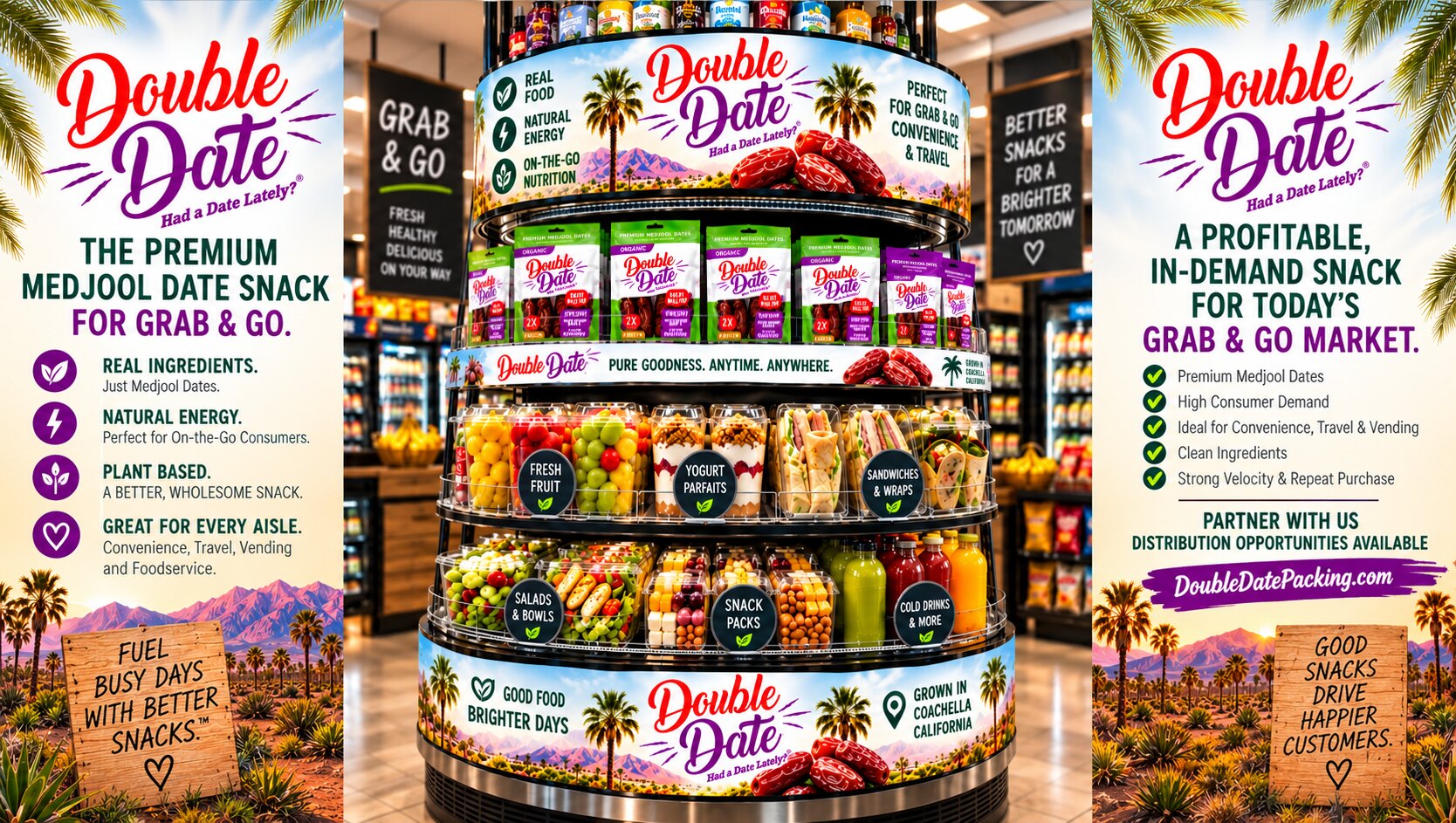
Featured brand
Premium Medjool dates grown in Coachella, California, now featured across MicroMarkets.us. Retailers and distributors can request wholesale information.

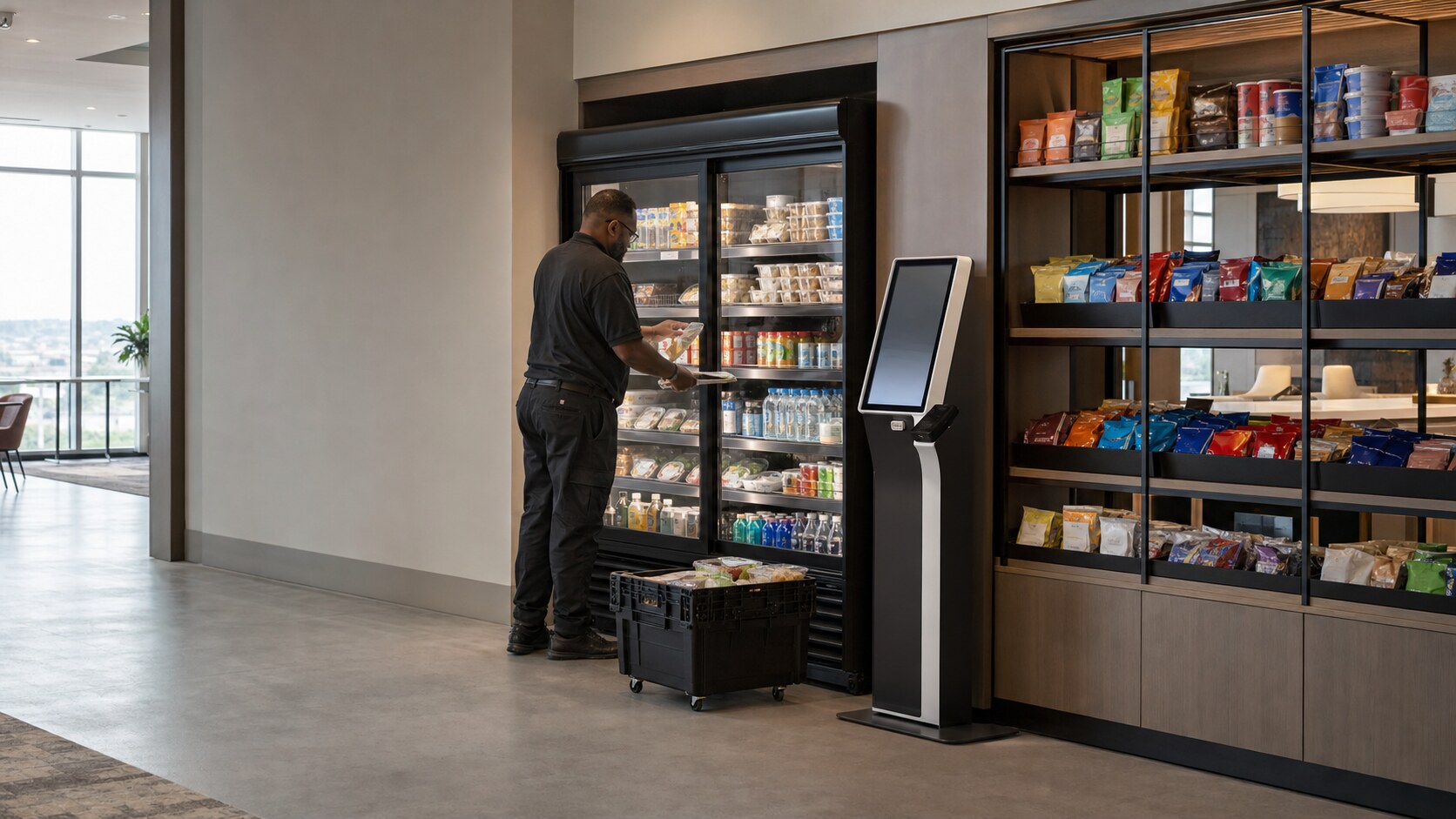
Micro market / noun
Usually set inside an office, hotel, residential building, school, or fitness facility, a micro market pairs refrigerated cases and open shelving with self-checkout. The assortment is broader than a vending machine; the operating discipline still comes from the route.
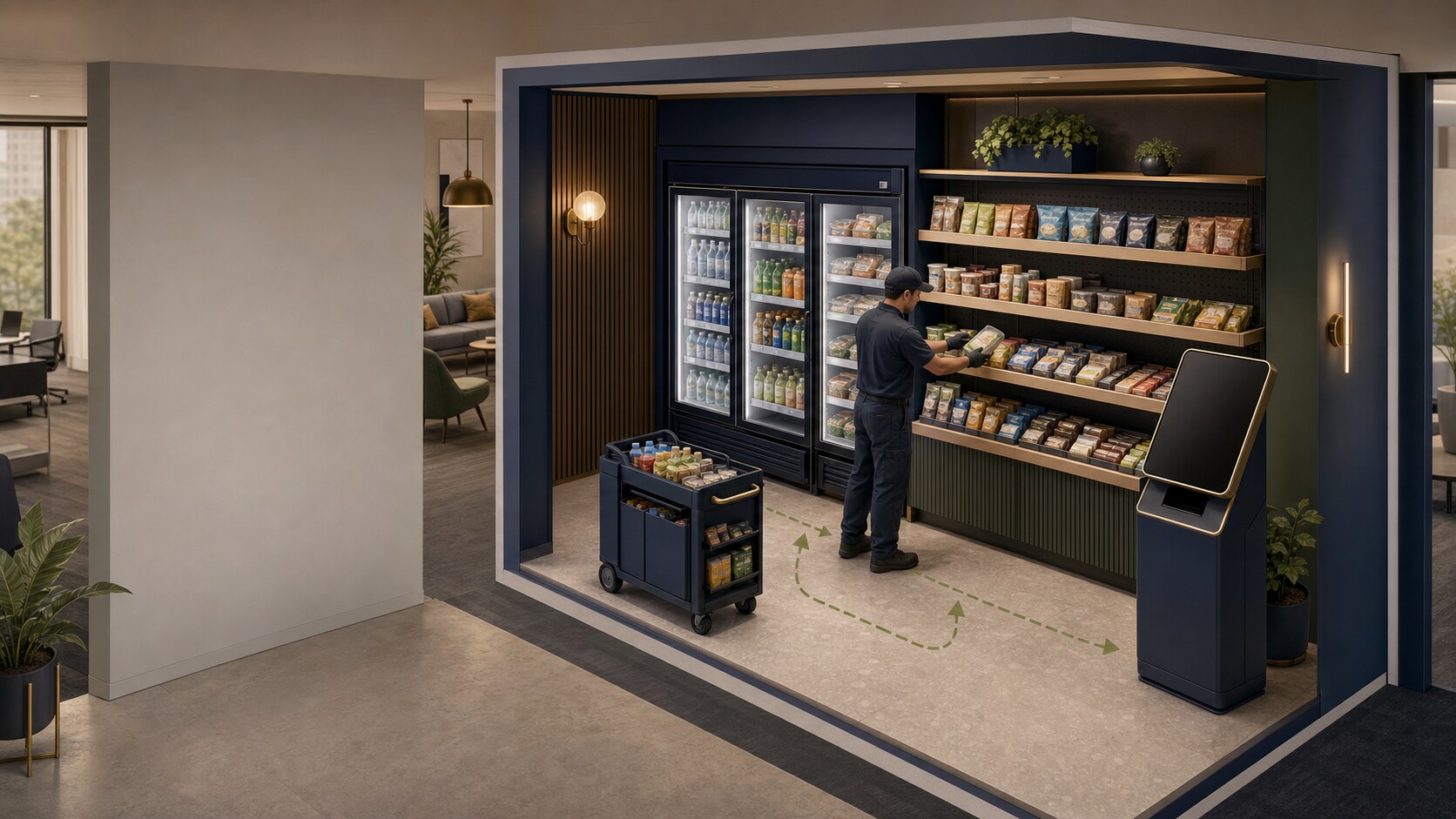
The place
The market lives where people already spend time: a breakroom, lobby, corridor, campus, residence, or wellness facility. Context decides what belongs on the shelf.
The set
Refrigerated cases widen the fresh and beverage set. Open shelves make room for discovery. Self-checkout keeps the format unattended.
The operator
Operators replenish, review the set, and make the small placement decisions that determine whether a new brand earns another cycle.
Operator lens / before the introduction
A good introduction is specific. It gives the operator enough information to judge fit without pretending the brand is further along than it is.
What physically fits the cooler, shelf, or machine?
How much product arrives at the route stop?
Where does the item sit in the local ladder?
How much operating room does the pack allow?
Can supply match the placement rhythm?
Why does this product belong in this place?
Each unattended format asks a different question of the pack. Start with the place, then earn the placement.
Machine-served snack and beverage routes. Single-serve, durable, price-disciplined, and constrained by the machine.
Open-shelf markets in offices and breakrooms. A wider assortment, more refrigeration, and faster brand turnover than vending.
Lobby and corridor retail for the travel moment. Pack size, portability, and immediate need shape the shelf.
Fitness, residential, education, and other unattended placements run by operators alongside their core routes.
The operating system
A micro market is a physical loop: replenish the set, make the purchase simple, review what moved, and return with a better assortment.
The introduction route
Write the product the way an operator reads it: pack, case, price, shelf life, lead time, and channel fit.
Test the brief against the economics and physical constraints of the intended channel.
Put the qualified brand in front of the right distributors and operators with a clear, honest ask.
Support first-set details: case quantity, price point, planogram slot, and delivery rhythm.
Return after a real velocity window. Keep what worked, name what did not, and learn from the route.
Make an introduction
Send the pack format, case configuration, suggested price, target channel, and the consumer moment it is made for. The curriculum desk reviews introductions on a rolling basis.
Email the curriculum desk